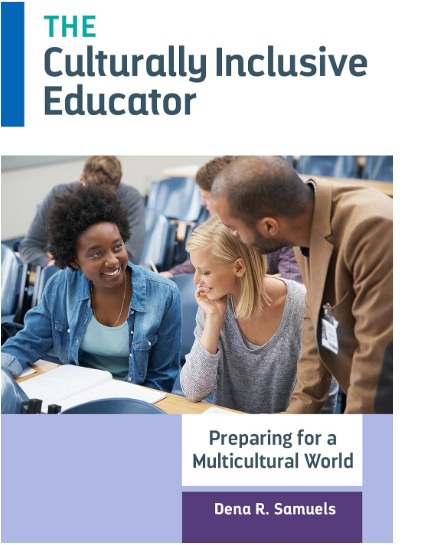
CATESOL Book Review Reflection: The Culturally Inclusive Educator: Preparing for a Multicultural World by D. R. Samuels
11/13/2025
Michelle Skowbo
By Bushra Wilkins
Introductory Overview
In The Culturally Inclusive Educator, Dena Samuels addresses the pressing need for educators to become more comfortable with the diversity of their students, especially in today’s increasingly multicultural educational environments. Samuels presents practical strategies that help educators reflect on their own biases, build culturally responsive teaching practices, and foster inclusive classroom settings where all students can thrive. This review examines the book’s core themes, including the importance of self-reflection, cultural awareness, and classroom strategies to promote diversity and inclusion.
Introduction
Dena Samuels' The Culturally Inclusive Educator (2014) is a timely and essential resource for teachers navigating diverse classrooms. As classrooms become increasingly multicultural, educators must adapt to meet the needs of students from a variety of cultural, racial, and socioeconomic backgrounds. Samuels argues that it is not enough for educators to simply acknowledge diversity; they must actively engage with it, adjust their teaching methods, and create environments where all students feel understood and valued. This book offers crucial insights and practical guidance for educators striving to make their classrooms more inclusive and responsive to the needs of all learners.
Key Themes and Highlights
1. Self-Reflection and Awareness of Biases
The book begins with a focus on the importance of self-reflection for educators. Samuels stresses that teachers must first recognize their own biases before they can effectively teach students from diverse backgrounds. The author offers tools for teachers to assess their own cultural competence and engage in ongoing self-reflection. Teachers unaware of their biases may unintentionally contribute to inequities in the classroom, which can negatively affect students' learning experiences. Cultivating self-awareness allows educators to shift their mindset toward inclusive practices that reflect the diversity of their students.
2. Cultural Competence and Responsiveness
Samuels emphasizes the critical role of cultural competence in fostering an inclusive classroom environment. She defines cultural competence as the ability to understand, communicate with, and effectively interact with people across cultures. This competence is not a one-time achievement but a continuous process. Samuels argues that educators must consistently work to improve their cultural competence by learning about the cultural backgrounds of their students, understanding the challenges they may face, and adjusting their teaching strategies accordingly. This cultural responsiveness helps bridge gaps between students' lived experiences and the academic content they encounter.
3. Creating Inclusive Classrooms
A key theme throughout the book is the creation of truly inclusive classrooms. Samuels provides various strategies to ensure that all students feel represented and valued, regardless of their cultural backgrounds. She discusses the importance of integrating diverse perspectives into the curriculum, using materials that reflect a range of cultural viewpoints, and designing activities that foster empathy and respect. Teachers are encouraged to consider students’ cultural identities when planning lessons, assessments, and classroom interactions. An inclusive classroom goes beyond diversity; it is a space where students see themselves reflected in the learning process and feel that their cultural identities are celebrated.
4. Building Relationships Across Differences
The book highlights the importance of building strong, trusting relationships with students, particularly those from marginalized or underrepresented groups. Samuels argues that educators who are comfortable with diversity are better able to connect with students and foster a sense of belonging. Building relationships involves learning about students' backgrounds, interests, and challenges while maintaining high expectations. By showing genuine interest in students as individuals, teachers can help them feel more engaged and motivated to succeed.
5. Practical Strategies for Teachers
Samuels offers actionable strategies that teachers can implement immediately to support diversity and inclusion in their classrooms. She provides concrete examples of how to incorporate culturally relevant materials, modify teaching styles, and develop classroom activities that recognize and celebrate diversity. These strategies include differentiated instruction, collaborative group work, and project-based learning that honors students' cultural knowledge and experiences. Teachers are encouraged to create opportunities for students to share their stories and perspectives, contributing to a learning environment based on mutual respect and understanding.
6. Addressing Challenges and Uncomfortable Conversations
Samuels does not shy away from discussing the challenges that teachers face when addressing diversity in the classroom. She acknowledges that conversations about race, culture, and identity can be uncomfortable for both teachers and students. However, Samuels emphasizes the importance of tackling these issues directly. Teachers must be willing to engage in difficult conversations about inequality, discrimination, and privilege in order to create a classroom culture that fosters critical thinking and empathy. Samuels provides practical advice for navigating these conversations with sensitivity and respect, ensuring that students feel safe to express their thoughts and emotions.
Relevance to Educators
The Culturally Inclusive Educator is an indispensable resource for teachers at all levels, particularly those working in diverse classrooms. As the demographics of schools continue to shift, educators are increasingly faced with the challenge of meeting the needs of students from various cultural, racial, and socioeconomic backgrounds. Samuels’ writing is clear and engaging, providing both a deep understanding of the theoretical underpinnings of cultural competence and a variety of practical, actionable strategies that teachers can implement immediately within their classrooms. These strategies are adaptable across a wide range of teaching contexts, making the book accessible and relevant to educators across different grade levels, subject areas, and educational settings.
The book’s relevance extends beyond just theory and technique; it challenges educators to reflect on their teaching practices, ensuring that they are not merely engaging in surface-level diversity initiatives but are instead creating meaningful, lasting connections with their students. Samuels encourages teachers to develop an inclusive teaching philosophy, where diversity is celebrated not as an obstacle but as an asset to learning. This is crucial in an era where schools are becoming increasingly multicultural, and where student success depends on an educator’s ability to recognize and value differences. For those striving to cultivate a classroom that fosters respect, inclusivity, and equity, The Culturally Inclusive Educator is not just a useful tool—it is a must-read.
Teachers’ Role in Supporting Diverse Learners
Samuels emphasizes the central role that teachers play in shaping students’ academic, social, and emotional growth, particularly in the context of a diverse classroom. Educators who are not only aware of but also embrace cultural diversity can have a profound impact on students’ overall experiences in school. Samuels argues that effective teachers go beyond presenting content—they actively build relationships, offer support, and create environments where every student feels recognized and valued. This is especially important for marginalized or underrepresented groups, whose voices and experiences may be overlooked in traditional classroom settings.
Being culturally responsive, as Samuels suggests, means more than just acknowledging diversity; it requires a proactive effort to understand the cultural backgrounds and needs of students. It involves creating a space where students feel empowered to share their perspectives and are encouraged to see themselves as active participants in the learning process. Teachers must be adept at adapting their methods, adjusting their content, and using strategies that address the specific needs of students from a variety of cultural backgrounds. Furthermore, cultural competence is not a fixed skill but an ongoing process, one that requires educators to continually reflect on their practices, seek feedback, and engage in professional development. Through these efforts, teachers can build an inclusive classroom environment that helps students thrive academically and socially.
Challenges for Teachers
Implementing culturally inclusive practices is not without its challenges, and Samuels acknowledges that teachers often face significant obstacles as they strive to become more culturally competent. One of the biggest hurdles is overcoming personal discomfort with diversity. Educators, particularly those who have not had extensive exposure to diverse student populations, may find it difficult to address cultural differences head-on. Samuels recognizes that this discomfort is natural, particularly given the complex and sometimes contentious nature of issues like race, privilege, and inequality. However, she stresses that it is crucial for educators to confront these challenges rather than avoid them.
To navigate these challenges effectively, Samuels encourages teachers to engage in continuous self-reflection, professional development, and collaboration with colleagues. Teachers must be open to acknowledging their biases, recognizing areas where they may need to grow, and seeking out resources and support to enhance their cultural competence. She underscores that educators should not expect to get everything right all the time; instead, they must be willing to make mistakes, learn from them, and continuously strive for improvement. This process of self-awareness and growth is essential for creating classrooms that are truly inclusive and supportive of all students.
Conclusion
In conclusion, The Culturally Inclusive Educator by Dena Samuels is an essential resource for educators who are committed to improving their cultural competence and creating classrooms where every student feels valued and supported. Through a combination of thoughtful self-reflection, practical strategies, and a strong emphasis on relationship-building, Samuels provides educators with the tools necessary to address the complex challenges of teaching in a diverse classroom. Her work offers both a theoretical foundation for understanding cultural inclusivity and a range of actionable methods for incorporating inclusive practices into everyday teaching. As educational environments become increasingly diverse, this book serves as a critical guide for educators looking to create classrooms that not only celebrate diversity but also foster equity and academic success for all students. It is a valuable resource for anyone striving to make a meaningful impact on students' lives through culturally responsive teaching.
Michelle Skowbo
The Culturally Inclusive Educator: Preparing for a Multicultural World by D. R. Samuels
By Bushra Wilkins
Introductory Overview
In The Culturally Inclusive Educator, Dena Samuels addresses the pressing need for educators to become more comfortable with the diversity of their students, especially in today’s increasingly multicultural educational environments. Samuels presents practical strategies that help educators reflect on their own biases, build culturally responsive teaching practices, and foster inclusive classroom settings where all students can thrive. This review examines the book’s core themes, including the importance of self-reflection, cultural awareness, and classroom strategies to promote diversity and inclusion.
Introduction
Dena Samuels' The Culturally Inclusive Educator (2014) is a timely and essential resource for teachers navigating diverse classrooms. As classrooms become increasingly multicultural, educators must adapt to meet the needs of students from a variety of cultural, racial, and socioeconomic backgrounds. Samuels argues that it is not enough for educators to simply acknowledge diversity; they must actively engage with it, adjust their teaching methods, and create environments where all students feel understood and valued. This book offers crucial insights and practical guidance for educators striving to make their classrooms more inclusive and responsive to the needs of all learners.
Key Themes and Highlights
1. Self-Reflection and Awareness of Biases
The book begins with a focus on the importance of self-reflection for educators. Samuels stresses that teachers must first recognize their own biases before they can effectively teach students from diverse backgrounds. The author offers tools for teachers to assess their own cultural competence and engage in ongoing self-reflection. Teachers unaware of their biases may unintentionally contribute to inequities in the classroom, which can negatively affect students' learning experiences. Cultivating self-awareness allows educators to shift their mindset toward inclusive practices that reflect the diversity of their students.
2. Cultural Competence and Responsiveness
Samuels emphasizes the critical role of cultural competence in fostering an inclusive classroom environment. She defines cultural competence as the ability to understand, communicate with, and effectively interact with people across cultures. This competence is not a one-time achievement but a continuous process. Samuels argues that educators must consistently work to improve their cultural competence by learning about the cultural backgrounds of their students, understanding the challenges they may face, and adjusting their teaching strategies accordingly. This cultural responsiveness helps bridge gaps between students' lived experiences and the academic content they encounter.
3. Creating Inclusive Classrooms
A key theme throughout the book is the creation of truly inclusive classrooms. Samuels provides various strategies to ensure that all students feel represented and valued, regardless of their cultural backgrounds. She discusses the importance of integrating diverse perspectives into the curriculum, using materials that reflect a range of cultural viewpoints, and designing activities that foster empathy and respect. Teachers are encouraged to consider students’ cultural identities when planning lessons, assessments, and classroom interactions. An inclusive classroom goes beyond diversity; it is a space where students see themselves reflected in the learning process and feel that their cultural identities are celebrated.
4. Building Relationships Across Differences
The book highlights the importance of building strong, trusting relationships with students, particularly those from marginalized or underrepresented groups. Samuels argues that educators who are comfortable with diversity are better able to connect with students and foster a sense of belonging. Building relationships involves learning about students' backgrounds, interests, and challenges while maintaining high expectations. By showing genuine interest in students as individuals, teachers can help them feel more engaged and motivated to succeed.
5. Practical Strategies for Teachers
Samuels offers actionable strategies that teachers can implement immediately to support diversity and inclusion in their classrooms. She provides concrete examples of how to incorporate culturally relevant materials, modify teaching styles, and develop classroom activities that recognize and celebrate diversity. These strategies include differentiated instruction, collaborative group work, and project-based learning that honors students' cultural knowledge and experiences. Teachers are encouraged to create opportunities for students to share their stories and perspectives, contributing to a learning environment based on mutual respect and understanding.
6. Addressing Challenges and Uncomfortable Conversations
Samuels does not shy away from discussing the challenges that teachers face when addressing diversity in the classroom. She acknowledges that conversations about race, culture, and identity can be uncomfortable for both teachers and students. However, Samuels emphasizes the importance of tackling these issues directly. Teachers must be willing to engage in difficult conversations about inequality, discrimination, and privilege in order to create a classroom culture that fosters critical thinking and empathy. Samuels provides practical advice for navigating these conversations with sensitivity and respect, ensuring that students feel safe to express their thoughts and emotions.
Relevance to Educators
The Culturally Inclusive Educator is an indispensable resource for teachers at all levels, particularly those working in diverse classrooms. As the demographics of schools continue to shift, educators are increasingly faced with the challenge of meeting the needs of students from various cultural, racial, and socioeconomic backgrounds. Samuels’ writing is clear and engaging, providing both a deep understanding of the theoretical underpinnings of cultural competence and a variety of practical, actionable strategies that teachers can implement immediately within their classrooms. These strategies are adaptable across a wide range of teaching contexts, making the book accessible and relevant to educators across different grade levels, subject areas, and educational settings.
The book’s relevance extends beyond just theory and technique; it challenges educators to reflect on their teaching practices, ensuring that they are not merely engaging in surface-level diversity initiatives but are instead creating meaningful, lasting connections with their students. Samuels encourages teachers to develop an inclusive teaching philosophy, where diversity is celebrated not as an obstacle but as an asset to learning. This is crucial in an era where schools are becoming increasingly multicultural, and where student success depends on an educator’s ability to recognize and value differences. For those striving to cultivate a classroom that fosters respect, inclusivity, and equity, The Culturally Inclusive Educator is not just a useful tool—it is a must-read.
Teachers’ Role in Supporting Diverse Learners
Samuels emphasizes the central role that teachers play in shaping students’ academic, social, and emotional growth, particularly in the context of a diverse classroom. Educators who are not only aware of but also embrace cultural diversity can have a profound impact on students’ overall experiences in school. Samuels argues that effective teachers go beyond presenting content—they actively build relationships, offer support, and create environments where every student feels recognized and valued. This is especially important for marginalized or underrepresented groups, whose voices and experiences may be overlooked in traditional classroom settings.
Being culturally responsive, as Samuels suggests, means more than just acknowledging diversity; it requires a proactive effort to understand the cultural backgrounds and needs of students. It involves creating a space where students feel empowered to share their perspectives and are encouraged to see themselves as active participants in the learning process. Teachers must be adept at adapting their methods, adjusting their content, and using strategies that address the specific needs of students from a variety of cultural backgrounds. Furthermore, cultural competence is not a fixed skill but an ongoing process, one that requires educators to continually reflect on their practices, seek feedback, and engage in professional development. Through these efforts, teachers can build an inclusive classroom environment that helps students thrive academically and socially.
Challenges for Teachers
Implementing culturally inclusive practices is not without its challenges, and Samuels acknowledges that teachers often face significant obstacles as they strive to become more culturally competent. One of the biggest hurdles is overcoming personal discomfort with diversity. Educators, particularly those who have not had extensive exposure to diverse student populations, may find it difficult to address cultural differences head-on. Samuels recognizes that this discomfort is natural, particularly given the complex and sometimes contentious nature of issues like race, privilege, and inequality. However, she stresses that it is crucial for educators to confront these challenges rather than avoid them.
To navigate these challenges effectively, Samuels encourages teachers to engage in continuous self-reflection, professional development, and collaboration with colleagues. Teachers must be open to acknowledging their biases, recognizing areas where they may need to grow, and seeking out resources and support to enhance their cultural competence. She underscores that educators should not expect to get everything right all the time; instead, they must be willing to make mistakes, learn from them, and continuously strive for improvement. This process of self-awareness and growth is essential for creating classrooms that are truly inclusive and supportive of all students.
Conclusion
In conclusion, The Culturally Inclusive Educator by Dena Samuels is an essential resource for educators who are committed to improving their cultural competence and creating classrooms where every student feels valued and supported. Through a combination of thoughtful self-reflection, practical strategies, and a strong emphasis on relationship-building, Samuels provides educators with the tools necessary to address the complex challenges of teaching in a diverse classroom. Her work offers both a theoretical foundation for understanding cultural inclusivity and a range of actionable methods for incorporating inclusive practices into everyday teaching. As educational environments become increasingly diverse, this book serves as a critical guide for educators looking to create classrooms that not only celebrate diversity but also foster equity and academic success for all students. It is a valuable resource for anyone striving to make a meaningful impact on students' lives through culturally responsive teaching.